Case Study
Development of a License Plate Tracker System for the Transportation Safety Division of 3M Company

Overview
3M Company's Transportation Safety Division, which plays a crucial role in designing and producing traffic safety products, was facing challenges with managing the complex process of license plate design requests from state Departments of Motor Vehicles (DMVs). The existing process was cumbersome and inefficient, with limited visibility and control over communications, approvals, and design production timelines. To address these issues, 3M partnered with Acts Media to develop a custom License Plate Tracker system. The new system aimed to streamline the request process, enhance communication between 3M and state DMVs, ensure the smooth progression of design and production workflows, and provide role-based access to users within 3M and state agencies.
Project Scope
The License Plate Tracker system was developed to automate and manage the entire lifecycle of a state's license plate request—from the initial request submission by the state DMV to the final delivery of the license plates. Key features of the system included:
-
1
Request Submission – Allowing state DMVs to submit a request for new license plate designs.
-
2
Communication Management – Providing a platform to manage and track all communications between the state DMVs and 3M.
-
3
Workflow Management – Taking users through a structured, step-by-step workflow to ensure that all aspects of the design and production process are followed and accounted for.
-
4
Role-Based Access – Implementing role-based access for different users to ensure that only authorized personnel can perform specific tasks.
Challenges
- Inefficient Communication: The process for designing and approving new license plates involved frequent back-and-forth communication between the state DMVs and 3M. With no centralized platform, email threads, phone calls, and manual tracking were used, resulting in lost information and delays.
- Lack of Workflow Control: The design and production process lacked structure, often leading to missed steps, delayed approvals, and confusion about the status of requests. It was difficult to track where a request was in the process and whether all tasks were completed before moving to the next stage.
- Limited Access and Accountability: Different users, from state DMV representatives to internal 3M employees, needed different levels of access to the system to perform their roles. There was no clear system in place to enforce this access control, leading to potential security risks and inefficiencies in task management.
- Time-Consuming Manual Processes: The old system involved a lot of manual input and tracking, which was time-consuming and prone to human error. Automating the process was a priority to save time and reduce mistakes.
Solution
-
Request Submission Portal
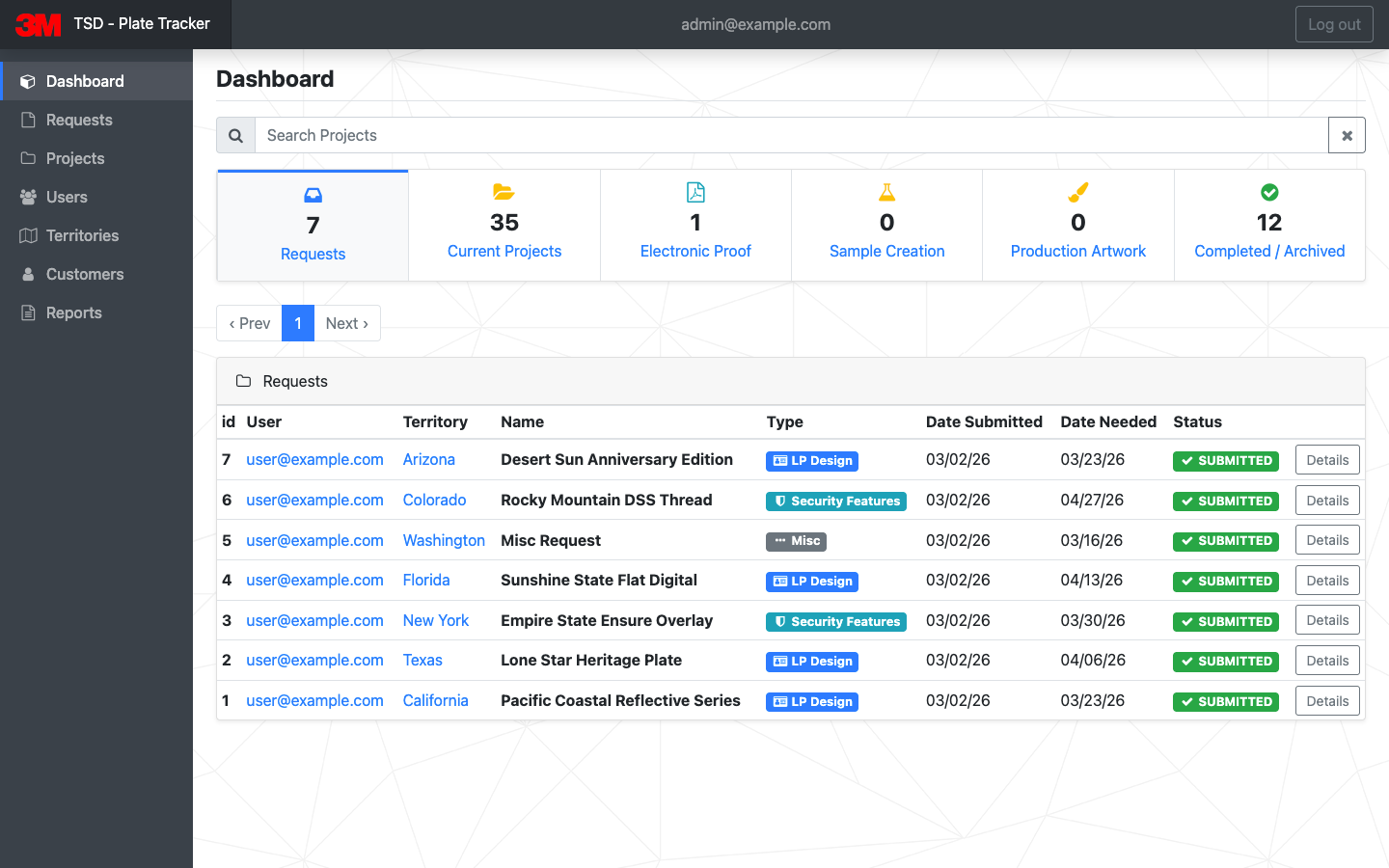
The system provided an intuitive, easy-to-use portal where state DMVs could submit their requests for new license plate designs.
- Customizable Submission Forms: The system featured customizable request forms where DMVs could submit specific details regarding the design requirements for the new license plate. This form included sections for required graphics, colors, text, and any special features or security elements.
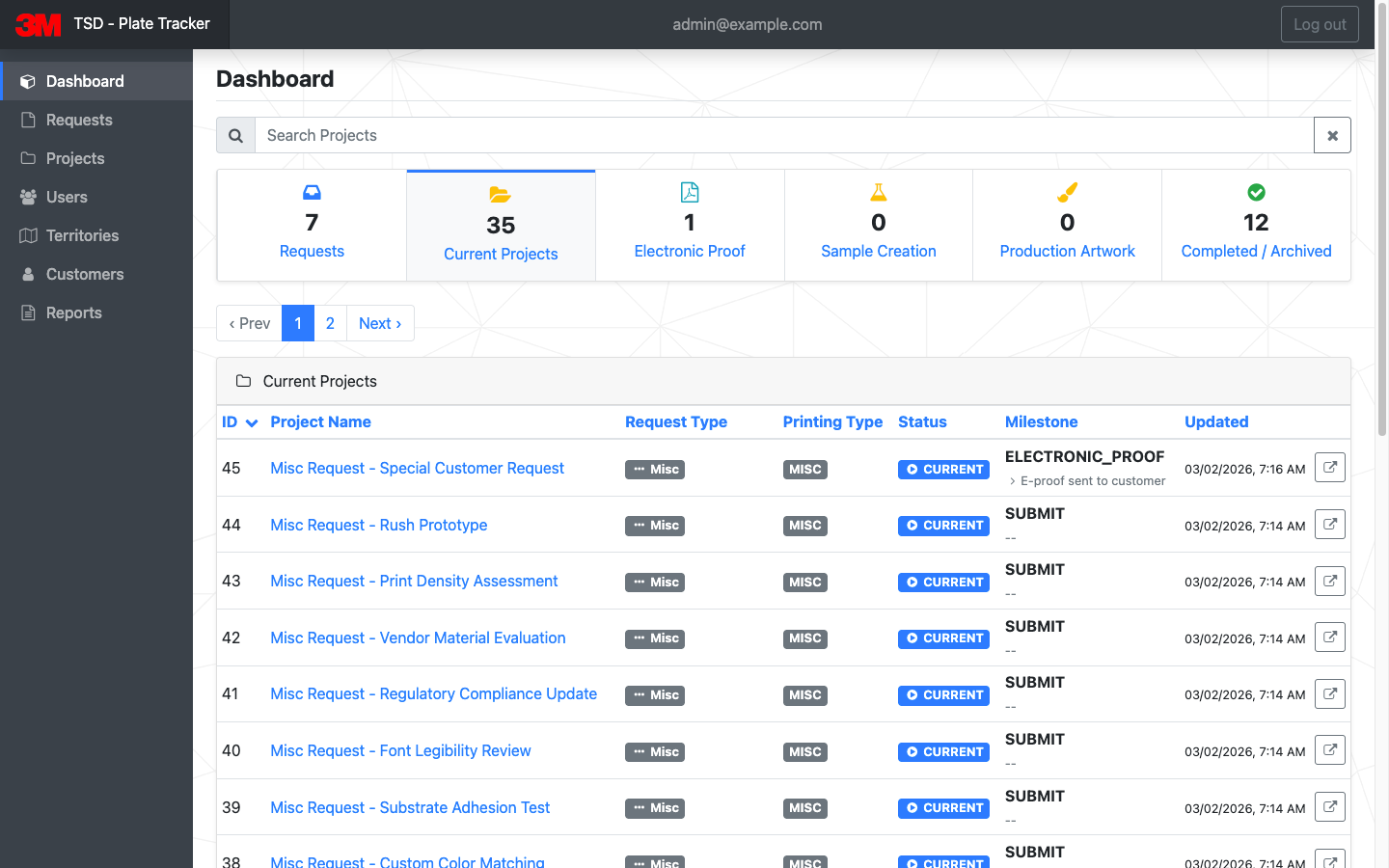
- Real-Time Confirmation and Tracking: Once a request was submitted, both the state DMV and 3M received real-time confirmation and a tracking ID. The state could easily track the status of their request, and 3M would immediately be notified to begin the review and design process.
-
Communication Management
The system provided a robust communication platform to manage all interactions between the state DMVs and 3M during the design and production phases.
- Centralized Messaging System: All communications, including design feedback, approval requests, and clarifications, were centralized within the system. This eliminated the need for email chains or phone calls and ensured that all relevant information was stored in one place for easy access and tracking.
- Audit Trail and History: The system maintained a detailed audit trail of all interactions between the state and 3M. This feature allowed both parties to easily refer back to prior communications and decisions, reducing the risk of miscommunication or missed information.
- Automated Notifications: Automated notifications were sent to both the state DMV and 3M at key points in the process. For example, the system would alert the state when a design was ready for review or when additional information was needed, ensuring that communication stayed on track and timelines were met.
-
Workflow Management
To ensure that every aspect of the design and production process was completed in a timely and efficient manner, the system featured a guided workflow process.
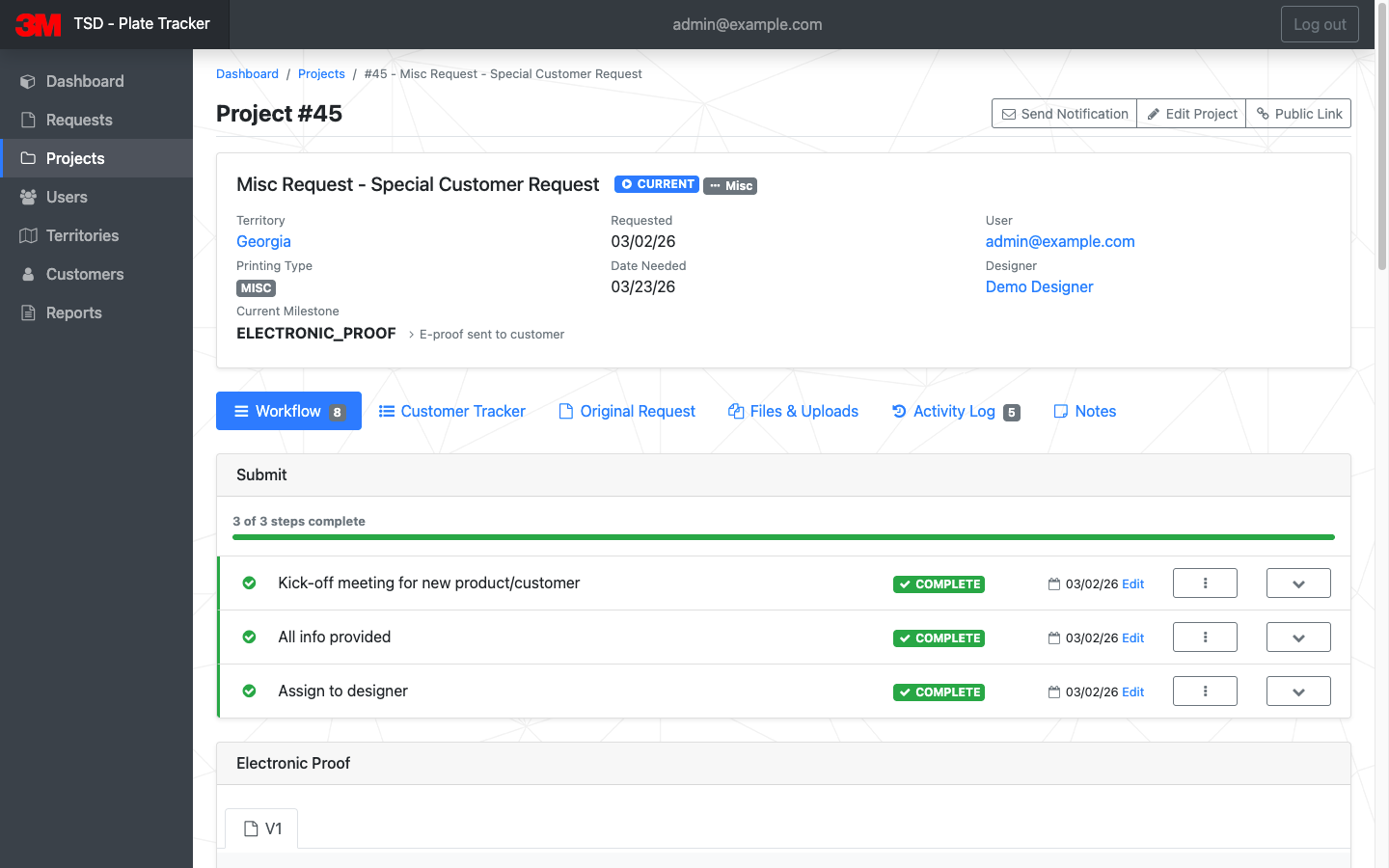
- Step-by-Step Workflow: The system guided users through a predefined set of steps, ensuring that all necessary actions were taken before moving to the next stage. For example, the system would ensure that design approval, material selection, testing, and final production steps were all completed in the correct order.
- Automated Task Assignment: Based on the workflow, tasks were automatically assigned to the appropriate user based on their role. For instance, once a design was submitted, it was automatically assigned to a 3M designer for review. Upon approval, the request would be sent to production managers for the next steps.
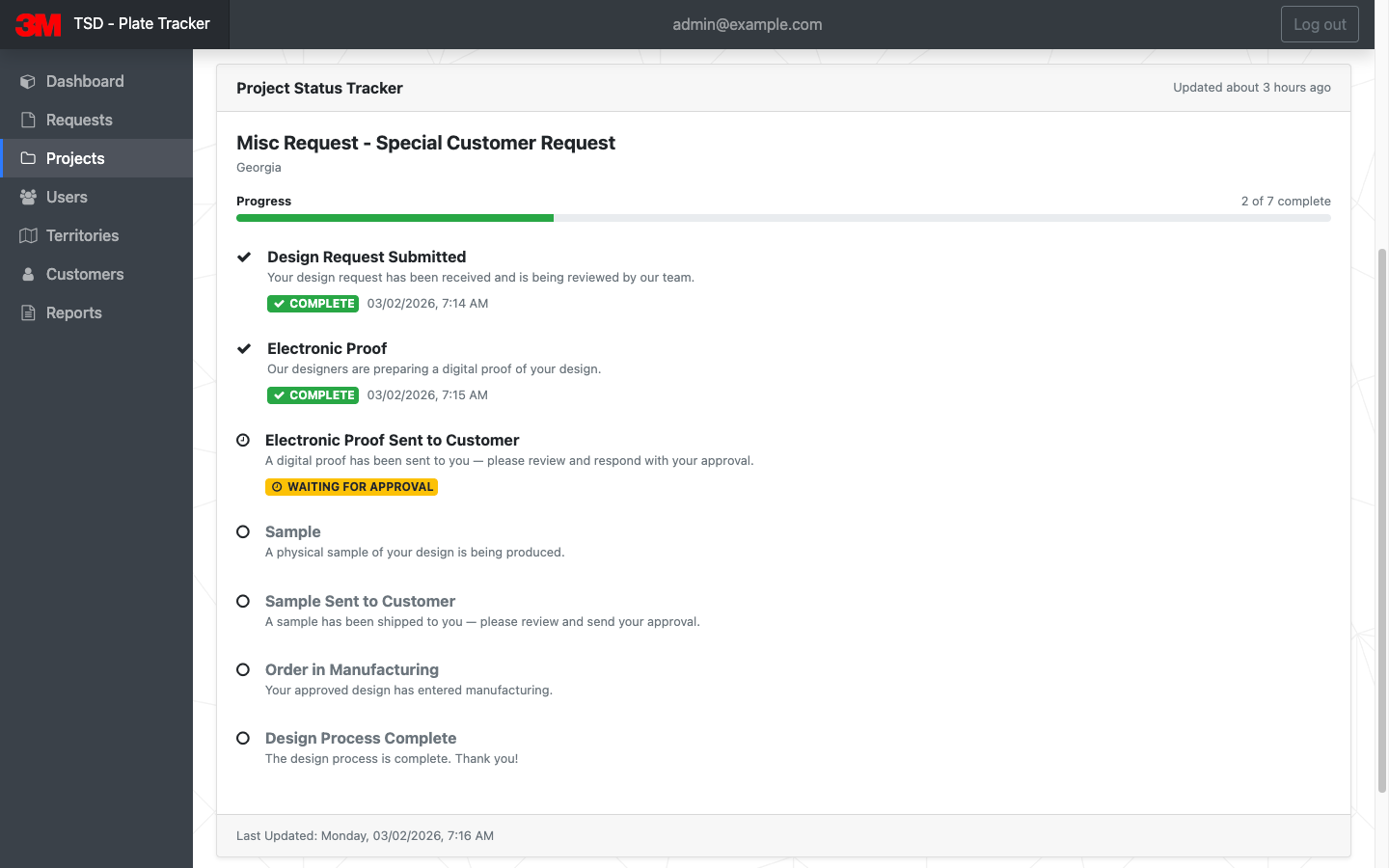
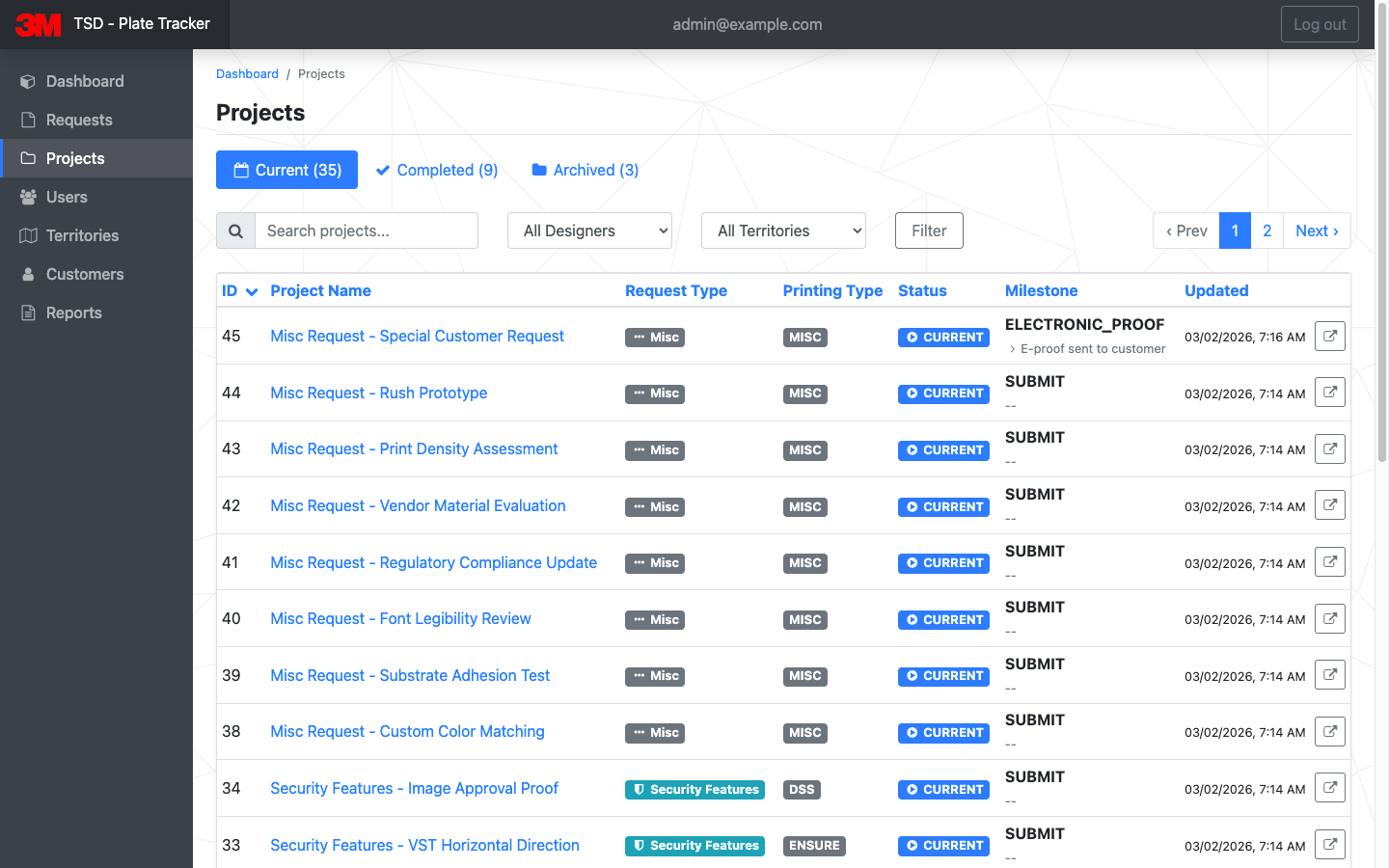
- Status Tracking: Both 3M and the state DMV could track the status of each request at any point in the workflow. The system provided a visual indicator of each request's current status, such as "In Design," "Under Review," or "Ready for Production," giving all parties clear visibility into the progress of each request.
-
Role-Based Access
To ensure security and appropriate access to information, the system implemented role-based access control (RBAC).
- Custom User Roles: The system allowed for the creation of custom roles for different users, such as state DMV representatives, 3M designers, production managers, and project administrators. Each role had specific permissions that allowed users to only access the relevant parts of the system based on their responsibilities.
- Granular Permissions: For example, a DMV representative could submit requests and review designs but not approve final designs or initiate production. On the other hand, a 3M production manager could initiate production but would not be able to make design decisions. This ensured that only authorized personnel had the ability to make critical changes or decisions.
- Audit and Accountability: The role-based access system also enabled better accountability. Each user's actions were tracked within the system, providing a clear history of who made changes, approved designs, or communicated specific information. This enhanced security and reduced the risk of errors or unauthorized changes.
Results
- Streamlined Communication: The centralized messaging and communication system greatly reduced the back-and-forth emails, missed messages, and delays, leading to faster turnaround times for requests. Both 3M and the state DMVs were able to maintain clear and consistent communication throughout the design and production process.
- Improved Efficiency and Workflow: The guided workflow system helped ensure that all steps in the design and production process were completed in a timely and organized manner. Tasks were automatically assigned, and the system tracked progress, reducing the chances of missed steps and improving overall efficiency.
- Enhanced Transparency: Both 3M and state DMVs could track the status of requests in real-time, providing better visibility into the lifecycle of each license plate request. This transparency helped both parties make informed decisions and avoid delays.
- Increased Accountability and Security: With role-based access, the system ensured that only authorized users could perform specific tasks, reducing the risk of unauthorized actions or mistakes. The system's audit trail also made it easier to track accountability for each action taken.
- Time Savings: Automating the request submission, design review, approval, and production processes saved significant time for both 3M and state DMVs. Tasks that previously required manual tracking and communication were now handled seamlessly through the system.
Conclusion
Acts Media successfully developed a custom License Plate Tracker system for the Transportation Safety division of 3M, addressing key challenges related to communication inefficiencies, lack of workflow control, and limited user access. The system has streamlined the entire process, allowing state DMVs to submit requests, track progress, and communicate effectively with 3M. With automated workflows, role-based access, and a centralized communication system, 3M now enjoys a more efficient, transparent, and secure process for managing license plate requests. This system has not only improved internal operations but also strengthened 3M's relationships with state DMVs, making it easier to manage the lifecycle of every license plate request.